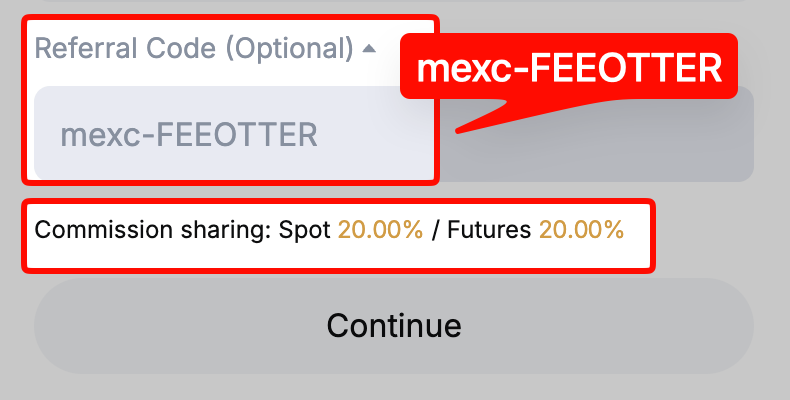
MEXC's fee rebate through Fee Otter is 60%: 20% returned automatically by the exchange plus a 40% extra rebate from Fee Otter, with the referral code mexc-FEEOTTER. Most referral codes you will find pay 20% (some 25%), so 60% is three times a common code: on 1,000 USDT of monthly fees, a 20% code returns 200 and mexc-FEEOTTER returns 600 (checked October 2026).
What really sets MEXC apart is its fees: 0.04% standard futures taker, 0.01% maker and 0% spot maker, which with Ourbit is the lowest set on this site. The rebate percentage is not the highest, but the fee base is small, and once both sides are counted the post-rebate effective rate almost ties Gate. The numbers are below.
Rates verified 18 October 2026 from MEXC's public API (the official fee page is rendered by JavaScript, so the API response is taken as authoritative). · Methodology
How the MEXC rebate works (charge first, refund later)
MEXC charges the full fee at the time of the trade and returns the rebate afterwards. The rate on your order ticket does not get cheaper; the saving arrives later.
The rebate comes in two layers, from different sources:
| Layer | Paid by | Rate | Condition |
|---|
| Automatic rebate | MEXC | 20% | Register with our referral code |
| Extra rebate | Rebate platform (Fee Otter) | 40% | Bind your UID on the platform |
The MEXC code is mexc-FEEOTTER, prefix included; without the prefix the code is not valid. Registering through the dedicated link on this page fills it in automatically, so it cannot be entered wrong.
What you actually pay: MEXC's list rates
| Product | Maker | Taker | Note |
|---|
| Futures (USDT perpetual, standard rate) | 0.01% | 0.04% | Maker lowest on this site, taker tied with Ourbit; the five major exchanges charge 0.05%–0.06% taker |
| Spot | 0% | 0.05% (BTC, ETH) | BTC and ETH spot taker is also half what the five major exchanges charge; most smaller pairs are 0.08% |
The table shows MEXC's standard rate, the most common one (about 560 of 1,194 contracts). MEXC also runs promotional low-fee pairs: as checked on 2026-10-18, BTC, ETH and SOL perpetuals are currently 0% maker / 0.02% taker (about 490 contracts in all), and about 125 contracts charge 0% on both sides (see MEXC's zero-fee page). On those pairs your actual cost is lower than the standard-rate figures below.
Two points:
- The 0.04% futures taker ties Ourbit for the lowest on this site (Binance/OKX/Gate/Pionex 0.05%, Bybit 0.055%, Bitget/XT.COM/HTX 0.06%, WEEX 0.08%). At the same volume, MEXC generates less in fees to begin with.
- Spot maker is free and spot taker is 0.05% on BTC and ETH, so on those pairs a spot trader's cost on MEXC is less than half that of the five major exchanges (most smaller pairs charge 0.08% taker).
A rebate is a percentage of the fee, so on a low-fee exchange the same rebate percentage converts into less money. Comparing exchanges therefore means looking at the post-rebate effective rate, not the percentage alone (table below).
Rebate rate
Through Fee Otter MEXC pays 60% (20% auto + 40% extra). The table lists the rate for each exchange:
What it returns at five volumes
At 0.04% taker / 0.01% maker with 70% taker fills, the blended rate is 0.031%:
| Monthly volume | Monthly fee | Rebate at 60% | Per year |
|---|
| 100,000 USDT | 31 USDT | 18.6 | ~223 |
| 500,000 USDT | 155 USDT | 93 | ~1,116 |
| 2,000,000 USDT | 620 USDT | 372 | ~4,464 |
| 5,000,000 USDT | 1,550 USDT | 930 | ~11,160 |
| 10,000,000 USDT | 3,100 USDT | 1,860 | ~22,320 |
The effective rate calculator takes your own rates and returns the rate you actually pay after the rebate.
If you are already a VIP on an exchange and want to rebind or sign up with another exchange, contact support: we can help you apply for special trading benefits or a higher rebate rate.
Is MEXC still worth it without the highest rebate?
Judge the post-rebate effective rate, not the rebate percentage. Using the same blended rate (70% taker fills):
| Exchange | Blended list rate | Rebate | Effective rate |
|---|
| Ourbit | 0.034% | 70% | 0.0102% |
| Gate | 0.041% | 70% | 0.0123% |
| MEXC | 0.031% | 60% | 0.0124% |
| XT.COM (VIP 0) | 0.054% | 70% | 0.0162% |
| WEEX (VIP 0) | 0.062% | 70% | 0.0186% |
| Pionex | 0.041% | 50% | 0.0205% |
| Bitget | 0.048% | 50% | 0.0240% |
| HTX | 0.048% | 50% | 0.0240% |
| Binance | 0.041% | 40% | 0.0246% |
| Bybit | 0.0445% | 40% | 0.0267% |
MEXC's rebate is 10 percentage points below Gate's, yet the post-rebate effective rate is almost identical (0.0124% against Gate's 0.0123%), because MEXC's fee base is a quarter smaller. In other words, on MEXC you get less back, but you also pay less out, and the net cost sits in the lowest band with Gate, behind only Ourbit.
MEXC has one more advantage:
- 0.05% spot taker on BTC and ETH, 0% spot maker: on those pairs a spot-focused trader's cost on MEXC is less than half that of the five major exchanges, before the rebate stacks on top.
(OKX, a 20% auto-rebate + exclusive rewards, is excluded from the table; contact support about our exclusive OKX rewards and promotions.)
Opening and binding a MEXC account
- Use the dedicated link, which already carries the code mexc-FEEOTTER.
- Complete registration; KYC follows MEXC's requirements for features and limits, per the official rules.
- Bind your MEXC UID on the rebate platform (Fee Otter).
- Fees generated afterwards start accruing rebates, viewable on the platform, with withdrawals on request.
The full step-by-step walkthrough with screenshots is in the MEXC registration guide.
When does the rebate arrive?
Fees are charged as normal and the rebate is added to your available balance on the platform after settlement, itemised row by row; you can request a withdrawal at any time. Payouts are on-chain USDT on BNB Smart Chain (BEP20) to an address you own, 1 USDT minimum per request, with a 0.015 USDT network fee borne by you. See how the rebate is settled.
Already have a MEXC account?
Within 30 days of signing up, a MEXC main account with no referrer yet can add one through the official self-service linking; after 30 days, or once a referrer is bound, it can no longer be changed (see MEXC's self-service referrer linking guide). Past that window, note that one MEXC KYC can register up to 2 accounts, so an existing user simply registers again with a new email via the dedicated link, confirms the code is pre-filled, and binds the new account's UID; if both are already used, close one and wait for the closure to finish (up to 15 working days). Steps in the MEXC rebind guide.
How is this different from a KOL code?
Most circulating codes pass on only the exchange's automatic 20% and keep the rest. Besides the percentage, what matters is whether the counterparty holds a direct, long-term agreement with the exchange: sub-affiliate status is reviewed, and if that person fails review or is downgraded, the rate their users receive is affected directly, and the binding itself is nearly impossible to change.
How MEXC compares
Risks to know before using MEXC
MEXC lists new tokens fast and charges low fees, but know these risks before you deposit:
- Registration and regulation: MEXC is registered in Seychelles and holds a Comoros international crypto licence, which CoinGecko describes as an unproven regulatory framework (CoinGecko trust score 9/10). In February 2025 Japan's FSA also asked Apple and Google to remove the MEXC app because it is not registered in Japan (The Block).
- Risk-control freezes: large or unusual transactions may be temporarily frozen by risk control. MEXC's official guide says anti-money-laundering checks can limit account functions until you submit the requested information. Complete KYC early, keep deposit and trade records, and don't park funds there.
- Keep only active trading funds there: an exchange is for money you are actively trading; withdraw idle funds and anything you hold long term.
- Use a cold wallet for long-term holdings: move large, long-term assets to a hardware cold wallet (such as a Ledger) and keep them offline.
- Futures and high leverage are high risk: leverage magnifies gains and losses alike. Beginners should avoid high leverage and learn the rules with small amounts first.
FAQ
What is the MEXC referral code?
mexc-FEEOTTER, prefix included; without the prefix it is not valid on MEXC. The dedicated link fills it in. See the MEXC referral code page.
How much is the MEXC rebate?
60%: 20% automatic from MEXC plus 40% extra from the rebate platform. High-volume VIP traders can contact support about a higher rate.
Are MEXC fees really the lowest?
At VIP 0 standard list rates, for futures, yes: the 0.01% maker is the lowest on this site and the 0.04% taker ties Ourbit for lowest. The 0% spot maker is joint-lowest too, but the 0.05% spot taker (0.08% on most smaller pairs) is above Ourbit's 0% (Ourbit charges no spot fees). Figures come from MEXC's public API; the rate on your own account is what applies.
Why is the effective rate about the same as Gate's when the rebate is lower?
Because a rebate is a percentage of the fee. MEXC's fee base is about a quarter smaller than Gate's, so a 60% rebate works out to almost the same post-rebate rate as Gate's 70%. Compare exchanges on the post-rebate effective rate, not the percentage.
Do the MEXC rebate and a VIP discount conflict?
No, they stack. A VIP discount lowers the list rate; the rebate returns part of what you paid.
Do both spot and futures earn a rebate?
The rebate follows the fees you generate, whatever the product. Spot maker fills carry no fee, so there is nothing to return on those.
Further reading
Information only, not investment advice. Fees and rebate percentages can change; MEXC's official announcements and the live Fee Otter platform are authoritative.


%2C2026-10-05%20%E5%8F%96%E6%A8%A3%3A%0A%20%20%20%20%20%20%20%E5%BA%95%E8%89%B2%20%230E3452%2C%E5%AD%97%E7%AC%A6%20%2303CA9B)%E3%80%82%0A%20%20%20%20%20%20%20%E7%94%A8%20potrace%20%E6%8F%8F%E5%AD%97%E7%AC%A6%E8%BC%AA%E5%BB%93%2C%E6%95%B4%E5%BC%B5%E7%95%AB%E5%B8%83%E7%9B%B4%E6%8E%A5%E6%98%A0%E5%B0%84%E5%88%B0%E9%80%99%E8%A3%A1%E7%9A%84%2032%20%E5%96%AE%E4%BD%8D%20%E2%80%94%E2%80%94%20%E4%B8%8D%E9%87%8D%E6%96%B0%E7%BD%AE%E4%B8%AD%2C%E4%BF%9D%E7%95%99%E5%AE%98%E6%96%B9%E7%9A%84%E7%95%99%E7%99%BD%E6%AF%94%E4%BE%8B%E3%80%82%0A%20%20%20%20%20%20%20%E8%A6%81%E6%94%B9%E8%AB%8B%E9%87%8D%E8%B7%91%E6%8F%8F%E5%9C%96%2C%E4%B8%8D%E8%A6%81%E6%86%91%E5%8D%B0%E8%B1%A1%E8%AA%BF%E3%80%82%20--%3E%0A%20%20%3Crect%20x%3D%221.5%22%20y%3D%221.5%22%20width%3D%2229%22%20height%3D%2229%22%20rx%3D%228%22%20fill%3D%22%230E3452%22%2F%3E%0A%20%20%3Cpath%20fill%3D%22%2303CA9B%22%20d%3D%22M23.02%205.97C22.14%206.02%2021.54%206.07%2021.22%206.1C20.72%206.15%2019.6%206.28%2019.41%206.31C19.31%206.33%2019.1%206.37%2018.94%206.39C18.29%206.5%2017.94%206.57%2017.2%206.73C16.92%206.79%2016%207.03%2015.8%207.09C15.36%207.23%2014.42%207.54%2014.39%207.56C14.38%207.57%2014.3%207.6%2014.23%207.62C13.82%207.76%2012.7%208.28%2012.13%208.6C11.95%208.7%2011.8%208.78%2011.79%208.78C11.7%208.78%2010.42%209.71%209.98%2010.08C9.16%2010.79%208.07%2012.09%207.6%2012.91C7.28%2013.46%207.18%2013.65%207.06%2013.91C6.87%2014.3%206.76%2014.53%206.68%2014.74C6.56%2015.08%206.37%2015.64%206.34%2015.73C6.33%2015.78%206.3%2015.91%206.27%2016C6.06%2016.79%205.93%2017.87%205.94%2018.62L5.95%2019.05L6.69%2019.04C7.78%2019.03%208.57%2018.94%209.73%2018.68C10.18%2018.58%2011.05%2018.33%2011.45%2018.18C11.52%2018.15%2011.7%2018.08%2011.84%2018.03C13.58%2017.38%2015.67%2016.19%2017.55%2014.77C17.8%2014.58%2018.67%2013.89%2018.74%2013.83C18.76%2013.81%2018.94%2013.66%2019.14%2013.48C19.34%2013.31%2019.54%2013.14%2019.58%2013.11C19.61%2013.07%2019.78%2012.92%2019.95%2012.77C20.94%2011.88%2022.24%2010.57%2023.2%209.48C23.68%208.94%2023.69%208.93%2023.86%208.73C23.94%208.63%2024.02%208.54%2024.03%208.53C24.17%208.4%2025.09%207.25%2025.52%206.67C25.67%206.47%2025.81%206.28%2025.83%206.26C25.86%206.23%2025.89%206.19%2025.9%206.16C25.92%206.13%2025.94%206.12%2025.95%206.13C25.98%206.15%2025.3%207.5%2024.99%208.07C24.88%208.28%2024.78%208.45%2024.78%208.46C24.78%208.46%2024.66%208.67%2024.51%208.93C24.24%209.4%2024.17%209.52%2024.07%209.69C24%209.81%2023.72%2010.27%2023.39%2010.8C22.69%2011.91%2021.44%2013.66%2020.74%2014.52C20.25%2015.12%2020.09%2015.31%2019.72%2015.73C19.01%2016.55%2018.19%2017.38%2017.42%2018.08C17.07%2018.39%2016.92%2018.52%2016.5%2018.87C16.37%2018.98%2016.24%2019.09%2016.2%2019.12C15.83%2019.43%2014.7%2020.21%2014.16%2020.54C13.69%2020.82%2012.69%2021.34%2012.41%2021.45C12.33%2021.48%2012.23%2021.52%2012.17%2021.55C12.01%2021.62%2011.45%2021.84%2011.11%2021.95C10.97%2022%2010.05%2022.26%209.84%2022.31C9.23%2022.45%208.97%2022.5%208.56%2022.56C8.43%2022.58%208.25%2022.61%208.16%2022.62C8.06%2022.64%207.79%2022.67%207.56%2022.69C7.32%2022.71%207.12%2022.74%207.12%2022.76C7.12%2022.85%207.58%2023.42%207.97%2023.82C9.2%2025.09%2010.67%2025.8%2012.52%2026.02C16.51%2026.48%2020.99%2024.06%2023.2%2020.25C23.32%2020.05%2023.43%2019.86%2023.46%2019.81C23.51%2019.73%2023.96%2018.81%2024.04%2018.62C24.67%2017.21%2025.19%2015.43%2025.52%2013.67C25.66%2012.9%2025.73%2012.45%2025.81%2011.77C25.99%2010.32%2026.05%209.33%2026.05%207.64C26.05%206.06%2026.04%206.01%2025.97%205.98C25.9%205.95%2023.53%205.94%2023.02%205.97Z%22%2F%3E%0A%3C%2Fsvg%3E%0A)


%2C2026-10-05%20%E5%8F%96%E6%A8%A3%3A%0A%20%20%20%20%20%20%20%E5%BA%95%E8%89%B2%20%23FFFFFF%2C%E5%AD%97%E7%AC%A6%20%235227FF)%E3%80%82%0A%20%20%20%20%20%20%20%E7%94%A8%20potrace%20%E6%8F%8F%E5%AD%97%E7%AC%A6%E8%BC%AA%E5%BB%93%2C%E6%95%B4%E5%BC%B5%E7%95%AB%E5%B8%83%E7%9B%B4%E6%8E%A5%E6%98%A0%E5%B0%84%E5%88%B0%E9%80%99%E8%A3%A1%E7%9A%84%2032%20%E5%96%AE%E4%BD%8D%20%E2%80%94%E2%80%94%20%E4%B8%8D%E9%87%8D%E6%96%B0%E7%BD%AE%E4%B8%AD%2C%E4%BF%9D%E7%95%99%E5%AE%98%E6%96%B9%E7%9A%84%E7%95%99%E7%99%BD%E6%AF%94%E4%BE%8B%E3%80%82%0A%20%20%20%20%20%20%20%E5%AE%98%E6%96%B9%E6%98%AF%E7%99%BD%E5%BA%95%E7%B4%AB%E8%89%B2%E5%AD%97%E7%AC%A6%3B%E7%99%BD%E5%BA%95%E5%8A%A0%E6%B7%A1%E9%82%8A%2C%E5%85%8D%E5%BE%97%E5%9C%A8%E7%99%BD%E8%89%B2%E8%83%8C%E6%99%AF%E4%B8%8A%E6%B6%88%E5%A4%B1%E3%80%82%0A%20%20%20%20%20%20%20%E8%A6%81%E6%94%B9%E8%AB%8B%E9%87%8D%E8%B7%91%E6%8F%8F%E5%9C%96%2C%E4%B8%8D%E8%A6%81%E6%86%91%E5%8D%B0%E8%B1%A1%E8%AA%BF%E3%80%82%20--%3E%0A%20%20%3Crect%20x%3D%221.5%22%20y%3D%221.5%22%20width%3D%2229%22%20height%3D%2229%22%20rx%3D%228%22%20fill%3D%22%23FFFFFF%22%20stroke%3D%22%23E4E4E7%22%2F%3E%0A%20%20%3Cpath%20fill%3D%22%235227FF%22%20d%3D%22M13.31%208.92L13.31%2012.28L9.94%2012.28L6.56%2012.28L6.57%2015.71C6.58%2019.51%206.57%2019.29%206.79%2020.2C7.56%2023.33%2010.21%2025.78%2013.38%2026.31C14.1%2026.43%2014.44%2026.44%2019.24%2026.44L23.91%2026.44L23.91%2023.05L23.91%2019.66L19.2%2019.65L14.48%2019.64L14.28%2019.56C13.89%2019.41%2013.63%2019.16%2013.44%2018.76L13.36%2018.58L13.35%2015.46L13.34%2012.34L18.56%2012.34L23.78%2012.34L23.78%208.95L23.78%205.56L18.55%205.56L13.31%205.56L13.31%208.92Z%22%2F%3E%0A%3C%2Fsvg%3E%0A)

 Telegram · @feeotter