If you are new to HTX futures, start with USDT-margined perpetuals. One BTC-USDT contract is 0.001 BTC, and tier 1 (positions up to 400,000 USDT) allows up to 200x with a 0.28% maintenance margin rate. Since March 30, 2026, though, accounts without Level 2 KYC are capped at 5x. Liquidation is based on the mark price: it triggers when the maintenance margin ratio reaches 100%, the system reduces the position in steps, and auto-deleveraging (ADL) only applies when the insurance fund cannot absorb the loss. BTC-USDT funding settles every 8 hours (compiled from the HTX help center and official API, checked 2026-10-17).
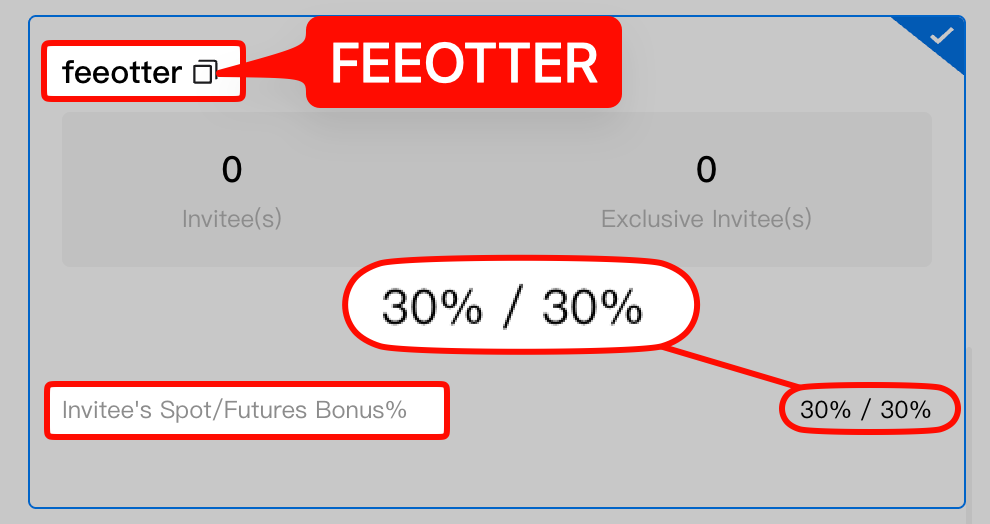
This guide covers HTX's futures rules after its 2026 system upgrade: activation, restricted regions, the 11 BTC-USDT risk tiers, liquidation and the insurance fund, ADL, the funding formula, position modes and order types. At the end we work through the liquidation price and fees for a 0.01 BTC position. For a side-by-side of beginner futures rules across exchanges, see futures for beginners: exchanges compared. If you have not signed up yet: register on HTX with our code FEEOTTER for a 50% futures fee rebate (30% automatic exchange rebate + 20% extra rebate), 2.5 times a common 20% code.
Key points
- Check your region first: the HTX user agreement bars derivatives for users in Israel, Iraq, Bangladesh, Bolivia, Ecuador, Kyrgyzstan and New Zealand. The US, mainland China, Hong Kong, the UK, Singapore, Russia and all EU member states get no service at all.
- Leverage depends on KYC: without Level 2, the cap is 5x and you cannot place futures orders through the API.
- Specs: BTC-USDT is 0.001 BTC per contract; tier 1 allows up to 200x with a 0.28% maintenance margin rate.
- Liquidation: the new system only looks at the maintenance margin ratio calculated on the mark price; 100% triggers it, and positions are reduced in steps.
- Fees: Prime 0 futures maker 0.02%, taker 0.06%; after binding through Fee Otter, the effective taker fee is 0.03%.
HTX BTC-USDT perpetual specs
| Item | USDT-M perpetual BTC-USDT |
|---|---|
| Margin / settlement asset | USDT |
| Contract size | 0.001 BTC |
| Max leverage | 200x (position value up to 400,000 USDT); 5x without Level 2 KYC |
| Liquidation check | Maintenance margin ratio on the mark price ≥ 100% |
| Funding | Every 8 hours, 00:00, 08:00 and 16:00 UTC+8 |
| Prime 0 fees | Maker 0.02%, taker 0.06% |
| Collateral modes | Single-Asset Collateral (isolated or cross) and Multi-Assets Collateral (cross only) |
Sources: HTX official API (swap_contract_info, v5/market/risk/limit), checked 2026-10-17; leverage and KYC limits from HTX to Adjust Futures Leverage Limits and API Permissions for New Users; fees from USDT-Margined Futures Trading Fees. Your actual rate is the one shown on the HTX fee page after you log in.
HTX sizes orders in contracts ("conts"), so 0.01 BTC is 10 contracts. The order box can switch to BTC or USDT; check the unit before you submit.
Before you start: activation, KYC and regions
According to the Derivatives Trading Activation Guide for New Users, the first time you open the futures page a "Derivatives Trading Activation" prompt appears. You complete ID verification, read and accept the HTX Platform User Agreement and the Risk Reminder, then tap "Activate Now". Requirements vary by country or region, and an EDD questionnaire may be required if risk controls are triggered. Activating USDT-margined futures covers both perpetuals and dated futures; coin-margined products are activated separately.
New rules from March 30, 2026 (official announcement):
- Without Level 2 KYC, futures leverage is capped at 5x. In copy trading, if the lead trader opens above 5x, your copy uses your maximum of 5x.
- With no KYC or only Level 1, you cannot place futures orders through the API.
- Sub-accounts inherit the main account's KYC level; trading bots are not affected by this change.
On regions, clause 1.2 of the HTX Platform User Agreement (updated September 2026) lists Israel, Iraq, Bangladesh, Bolivia, Ecuador, Kyrgyzstan and New Zealand as jurisdictions where derivatives trading is prohibited. If you live in one of these places, treat the rules below as reference only. KYC requirements across exchanges are compared in exchange KYC compared.
We did not find an official HTX page describing a futures demo account or testnet this time. If you want to practise, use the smallest contract size.
Collateral modes and position modes
USDT-margined futures offer two collateral modes (How to Switch Between Single-Asset and Multi-Assets Collateral Modes):
- Single-Asset Collateral: choose isolated or cross margin. With isolated margin, each position has its own margin and the most you lose is that margin.
- Multi-Assets Collateral: cross margin only, currently for USDT-margined futures only.
- Switching: close all positions and cancel all orders first. On the web, choose in the Assets panel under Futures → USDT-M; in the app, tap "⋯ → Collateral Mode" on the futures page.
Position modes are one-way and hedge. One-way holds a single direction per symbol, an opposite order first closes the existing position, and only one-way mode supports reduce-only orders. Hedge mode holds longs and shorts at the same time, and futures grid only works in hedge mode. After the 2026 upgrade, an account can use only one position mode at a time instead of setting it per trading pair, and you cannot switch with open positions or orders (USDT-M futures system upgrade announcement, Position Modes Explained).
Also, since July 27, 2026, unrealized PnL in cross margin can no longer be transferred out of the futures account. Close the position to realize the profit first (official announcement).
BTC-USDT risk tiers: bigger positions, lower leverage
The new system tiers by position value, with the same parameters for isolated and cross:
| Tier | Position value (USDT) | Max leverage | Maintenance margin rate |
|---|---|---|---|
| 1 | Up to 400k | 200x | 0.28% |
| 2 | 400k to 450k | 175x | 0.30% |
| 3 | 450k to 500k | 150x | 0.35% |
| 4 | 500k to 600k | 125x | 0.40% |
| 5 | 600k to 3.6M | 100x | 0.55% |
| 6 | 3.6M to 8M | 75x | 0.67% |
| 7 | 8M to 10M | 50x | 0.80% |
| 8 | 10M to 15M | 30x | 1.17% |
| 9 | 15M to 20M | 20x | 1.25% |
| 10 | 20M to 30M | 10x | 1.75% |
| 11 | 30M to 60M | 5x | 2.50% |
Source: HTX official API (v5/market/risk/limit?contract_code=BTC-USDT), checked 2026-10-17. When matching a tier, the new system counts positions in both directions plus open orders instead of net position only. Most retail positions sit in tier 1.
Liquidation: mark price, step-by-step reduction
When it triggers
Under the April 2026 system upgrade announcement, the old rule required margin ratios calculated on both the last price and the mark price to reach the threshold, and used an adjustment factor. The new rule only uses the maintenance margin ratio calculated on the mark price; 100% triggers liquidation, and risk is assessed with tiered maintenance margin rates. Margin ratio = maintenance margin ÷ account equity.
Cross margin accounts also get a "risk-control order cancellation" step: when the initial margin ratio on the mark price reaches 100%, the system cancels all non-reduce-only orders and the account can only reduce positions. Liquidation follows only if the maintenance margin ratio also reaches 100%. Isolated margin does not use this step.
How liquidation runs
The Liquidation Rules for Futures Trading describe a tiered process: instead of closing the whole position at once, the system lowers the tier and reduces the position step by step. The system takes over the position and executes it in the market, and any profit from that process goes into the insurance fund. A small fee may be charged when the liquidation engine processes orders; the page does not state the rate.
HTX: the insurance fund covers traders' negative equity losses from bankrupt positions. Each contract that supports only isolated margin has its own fund; contracts that support both cross and isolated margin (such as BTCUSDT and ETHUSDT) share one USDT fund. If failed liquidation orders leave negative equity at settlement, the fund covers it first, and any shortfall goes to auto-deleveraging (ADL). (HTX liquidation rules)
ADL: when the insurance fund runs short
Under the Auto-Deleveraging (ADL) Rules, ADL only runs when the insurance fund is depleted or drawing down fast. The system matches the highest-ranked counterparty positions directly at the liquidated order's bankruptcy price, and no further socialized loss is applied after ADL. Ranking uses leveraged PnL: for a winning position it is PnL ratio ÷ margin ratio, for a losing one PnL ratio × margin ratio, so large profits with low margin ratios rank first. The ADL indicator next to your order has 5 bars; all 5 lit means you rank near the top.
Funding: every 8 hours for BTC
Funding is paid between longs and shorts, and the platform takes no cut. When the rate is positive, longs pay shorts; when negative, shorts pay longs. You only pay or receive if you hold a position at settlement. BTC-USDT settles every 8 hours at 00:00, 08:00 and 16:00 UTC+8; other pairs may settle every 4 hours or every hour.
- Funding fee = net position × contract face value × settlement price × funding rate, settled at the index price.
- Rate formula (since November 18, 2025): funding rate = clamp{[average premium index + clamp(0.01% − average premium index, premium deviation cap, premium deviation floor)] ÷ (8 ÷ N), funding rate cap, funding rate floor}, where N is the funding interval in hours.
- Caps: HTX's Funding Calculation page uses BTC as the example, with a ±0.05% premium deviation and a ±0.375% funding rate cap. Since October 2025, HTX adjusts intervals and caps for some pairs dynamically without separate announcements; the contract details page shows the current values.
At the time of checking (2026-10-17), the BTC-USDT funding rate was about 0.0016%. Sources: Funding Calculation, funding formula update, funding parameter adjustment mechanism, official API.
Orders: learn these first
| Type | What it does | When to use it |
|---|---|---|
| Limit + Post only | Rests on the book as a maker order only | To pay the 0.02% maker rate |
| Reduce-only (one-way mode) | Only reduces the existing position, never opens a reverse one | Stop-loss, take-profit |
| TP/SL and trigger orders | Places the order once the trigger price is hit | Pre-set exits |
| Flash Close | Fills within the best 30 price levels; any remainder becomes a limit order | Fast exit in volatile markets |
| Trailing stop | Triggers after a pullback of the set ratio | Let a winning trade run |
Source: Trading Rules of USDT-Margined Contracts. After the upgrade, isolated mode lets you set separate leverage for longs and shorts, and you can change leverage with open orders.
Worked example: liquidation price for 0.01 BTC, isolated 10x
HTX does not publish an isolated liquidation price formula in its help center. The figures below are our own, derived from HTX's definition of the maintenance margin ratio. Assume a long of 10 contracts (0.01 BTC) at 80,000 USDT, isolated 10x, Single-Asset Collateral, tier 1 maintenance margin rate 0.28%, no fees or funding, and a mark price equal to the entry price:
| Item | Calculation | Result |
|---|---|---|
| Position value | 80,000 × 10 × 0.001 | 800 USDT |
| Margin | 800 ÷ 10 | 80 USDT |
| Liquidation condition | margin + (P − 80,000) × 0.01 = P × 0.01 × 0.28% | Maintenance margin ratio hits 100% |
| Estimated liquidation price | (80,000 − 8,000) ÷ (1 − 0.28%) | About 72,202 USDT (about 9.7% lower) |
At 5x (the cap without Level 2 KYC), the liquidation price is about 64,180 USDT (about 19.8% lower); at 20x, about 76,213 USDT (about 4.7% lower). The estimated liquidation price on the order page is the one that counts.
On fees, Prime 0 futures are 0.02% maker and 0.06% taker, calculated as contracts × face value × fill price × rate. Opening and closing this position with market orders costs 800 × 0.06% × 2 = 0.96 USDT; with maker limit orders it costs 0.32 USDT. After binding through Fee Otter:
| Item | Rebate | Effective taker | Effective maker | Taker round trip above |
|---|---|---|---|---|
| Fee Otter rebate | 50% (30% automatic exchange rebate + 20% extra rebate) | 0.03% | 0.01% | 0.48 USDT |
Of the 50%, HTX refunds 30% straight to your exchange account. Fee Otter settles the other 20% daily at 16:00 (UTC+8) and pays it on request as on-chain USDT (BEP20), with a 1 USDT minimum and a 0.015 USDT network fee paid by you. Screenshots of HTX's automatic rebate are on the rebate rates page. If you are already a VIP on an exchange and want to switch accounts or sign up elsewhere, contact support; we can help request special trading benefits or a higher rebate. For the effective-fee math see perp fees after rebate, and for maker vs taker see maker and taker fees explained.
Where HTX operates
Under clause 1.2 of the HTX Platform User Agreement (updated September 2026, checked 2026-10-17):
- No services at all: mainland China, the United States, Cuba, Iran, North Korea, Sudan, Syria, Venezuela, Hong Kong, the United Kingdom, Singapore, Myanmar, Crimea, Donetsk, Luhansk, Kherson, Zaporizhzhia, Sevastopol, Russia and all EU member states.
- No derivatives: Israel, Iraq, Bangladesh, Bolivia, Ecuador, Kyrgyzstan and New Zealand.
The agreement says the list may change without notice. For licensing by country, see exchange licenses by country.
Risks
The example shows that an isolated 10x long is liquidated after a move of about 9.7% against you. Futures can wipe out your margin quickly, so only trade money you can afford to lose and practise stop-losses and liquidation prices with the smallest size first. In May 2026 the UK government added Huobi Global S.A., which operates HTX, to its Russia sanctions list (UK government notice), and HTX's hot wallets were hacked in November 2023. Do not leave long-term holdings on an exchange, and ignore anyone promising copy trading or managed accounts that never lose.
HTX futures and your rebate
The rebate covers trading fees only. Funding is paid between traders, and amounts that go to the insurance fund during liquidation are not fees, so neither is rebated; the rebate also does not change your margin or liquidation price. Under the HTX referral program rules, rewards are based on net fees actually paid, so trades using futures trial bonuses, zero fees or negative fees do not count. Sign up on HTX with our code FEEOTTER and submit your UID on Fee Otter for a 50% futures rebate. HTX referral codes cannot be changed once bound; if you already used someone else's code, see the HTX rebind guide. Sign-up steps are in how to register on HTX, and spot and futures rebate math is in the HTX fee rebate guide.

 Telegram · @feeotter