HTX's (formerly Huobi) latest proof of reserves is the October 1, 2026 snapshot: BTC reserve ratio 104%, ETH 102%, TRX 108% and US dollar stablecoins combined (USDs) 104%, with all 8 listed items above 100%. HTX publishes a Merkle tree report every month, and you can download the report and the MerkleVerify tool to confirm your own balance is included (HTX proof of reserves page and public API, checked 2026-10-17).
Proof of reserves (PoR) answers one question: does the exchange hold enough of each coin to cover what it owes users? Two parts of HTX's report deserve a closer look. First, reserves are split between HTX's own wallets and third-party custody, and more than 70% of ETH and about 80% of stablecoin reserves sit with third-party custodians, which HTX says you must verify with the custodians directly. Second, USDT on its own is at 64%; the combined USDs figure reaches 104% only because USDC, USDD and other stablecoins are over-covered. This article lays out HTX's numbers and then explains how to verify them yourself.
Key points
- Latest snapshot 2026-10-01: BTC 104%, ETH 102%, TRX 108%, USDs 104%, HTX 103%, XRP 105%, DOGE 102%, SOL 109%.
- Monthly: the official page currently lists 6 reports, 2026-05-01 to 2026-10-01.
- Heavy third-party custody: about 73% of ETH and 80% of USDs reserves are with third-party custodians, versus about 8% for BTC.
- USDT alone is 64%: merged into USDs, stablecoins come to 104%.
- Self-verification: download your report under Assets → PoR Reports and check it with MerkleVerify.
Latest proof of reserves: 2026-10-01 snapshot
| Item | User assets | HTX wallets | Third-party custody | Reserve ratio |
|---|---|---|---|---|
| BTC | about 19,288.72 BTC | about 18,325.92 BTC | about 1,678.04 BTC | 104% |
| ETH | about 108,150.13 ETH | about 29,751.31 ETH | about 80,799.23 ETH | 102% |
| TRX | about 8.78 billion TRX | about 9.43 billion TRX | 0 | 108% |
| USDs (USD stablecoins combined) | about 905 million | about 186 million | about 753 million | 104% |
| HTX | about 224.7 trillion HTX | about 231.9 trillion HTX | about 0.58 trillion HTX | 103% |
| XRP | about 24.93 million XRP | about 26.17 million XRP | 0 | 105% |
| DOGE | about 394 million DOGE | about 402 million DOGE | 0 | 102% |
| SOL | about 367,678 SOL | about 400,995 SOL | 182 SOL | 109% |
Reserve ratio = (HTX wallets + third-party custody) ÷ user assets. Source: HTX proof of reserves page and the official public API it uses, checked 2026-10-17. HTX says a ratio of 100% or higher means the platform has enough assets to cover all users, and that HTX's corporate holdings are kept in a completely separate ledger and are not counted in reserves.
Stablecoin breakdown: USDT alone is 64%
HTX merges US dollar stablecoins into a single "USDs" line for the reserve ratio and lists each coin underneath:
| Stablecoin | User assets | Reserves (wallets + custody) | Coin-level ratio |
|---|---|---|---|
| USDT | about 810 million | about 520 million | 64% |
| USDC | about 27.33 million | about 247 million | 904% |
| USDD | about 64.60 million | about 135 million | 209% |
| U | about 2.48 million | about 37.25 million | 1502% |
| USDS | about 0.53 million | 0.48 million | 90% |
| USDs total | about 905 million | about 939 million | 104% |
Subtracting HTX's figures: USDT reserves are about 291 million short of what users hold, while the surplus in USDC, USDD and U adds up to about 325 million, leaving USDs about 34.09 million over in total. Merging the coins means the USDT shortfall is offset by surplus reserves in other stablecoins; HTX's page does not explain how it would move between stablecoins to pay USDT withdrawals.
Compared with the previous report: 2026-09-01 vs 2026-10-01
| Item | 2026-09-01 | 2026-10-01 |
|---|---|---|
| BTC | 104% | 104% |
| ETH | 102% | 102% |
| TRX | 109% | 108% |
| USDs | 102% (USDT alone 67%) | 104% (USDT alone 64%) |
| HTX | 103% | 103% |
| XRP | 104% | 105% |
| DOGE | 101% | 102% |
| SOL | 103% | 109% |
Fee Otter pulled the 2026-09-01 figures from the same official API in October 2026. User BTC on HTX fell from about 19,499 to about 19,289, and user USDT from about 872 million to about 810 million. A single report is only a snapshot; staying above 100% for many reports in a row says more about an exchange's habits. According to an HTX release in September (as republished by TechFlow), it had published PoR data for 47 consecutive months at that point.
Worked example: what if you count only HTX's own wallets?
HTX's page says third-party custodial balances are held by the custodians, and that to verify them you must contact those custodians directly; it does not name them. Using HTX's numbers, here is the coverage from HTX's own wallets alone:
| Item | Calculation | HTX wallets only | Custody share of reserves |
|---|---|---|---|
| BTC | 18,325.92 ÷ 19,288.72 | about 95.0% | about 8.4% |
| ETH | 29,751.31 ÷ 108,150.13 | about 27.5% | about 73.1% |
| USDs | 186 million ÷ 905 million | about 20.5% | about 80.2% |
| TRX, XRP, DOGE | wallets ÷ user assets | same as the reserve ratio | 0 |
In money terms: if you keep 10,000 USDT on HTX, this report shows about 6,410 USDT of USDT reserves behind it, of which only about 514 USDT sit in HTX's own wallets and the rest with third-party custodians; the gap is covered by surplus in other stablecoins. That does not mean anything is wrong with the assets. It does mean this part cannot be checked with PoR tools.
HTX: reserve ratio = HTX's on-chain assets snapshotted ÷ total users' assets on HTX, and 100% or higher indicates the platform has sufficient assets to cover all users. The assets in the custodial wallets are maintained by third-party custodians; to verify these balances, contact the custodians directly. (HTX proof of reserves)
How HTX's PoR works: a Merkle tree
HTX's page describes three steps:
- Verify address ownership: the cold and hot wallet addresses used as reserves must belong to HTX.
- Snapshot user balances: based on each account's holdings at the time of the snapshot.
- Build the Merkle tree: hashed UIDs and balances are linked into data blocks and all user data forms a Merkle tree; if any account ID or balance changes, the Merkle root changes.
The page mentions verification by a third-party audit agency but does not name it or attach an audit report.
How to verify it yourself
Check that your assets are included
- Log in on the HTX website and go to Assets → PoR Reports.
- Choose a report and download it.
- Download HTX's MerkleVerify tool and check your Merkle hash or record ID from the report.
Check HTX's reserve addresses and balances
- With HTX's tool: download the PoR file and the VerifyAddress tool.
- With third-party tools: the page links BTC, ETH and TRX signature verifiers; paste an address with its message and signature from the PoR file.
Source: HTX proof of reserves page. You are verifying the balance at the snapshot, so anything deposited afterwards only shows up in the next report. These tools cannot verify the third-party custody portion.
What PoR proves and what it does not
What it proves
- At the snapshot, wallets plus custody held more of each of the 8 listed items than HTX owed users.
- Your own balance was included in user assets (once you verify it with the Merkle data).
What it does not prove
- Anything after the snapshot: balances change every day.
- Third-party custodial balances: HTX says to check with the custodians, and user tools cannot reach them.
- Unlisted coins: HTX lists only 8 items.
- The exchange's overall finances: PoR compares reserves with user assets only, not HTX's own liabilities or operations.
HTX's security record and regulation
- November 2023 hot wallet hack: HTX and Heco Chain were exploited, and Justin Sun said HTX would fully compensate exchange-side losses (CoinDesk).
- May 2026 UK sanctions: the UK government added Huobi Global S.A., which operates HTX, to its Russia sanctions list (UK government notice).
- August 2026 withdrawal address rotation: HTX spread hot wallet funds across regularly rotated withdrawal addresses and says each address's exposure is kept below 1 million USD and covered by the HTX insurance fund (official announcement).
PoR is a transparency tool the exchange publishes and users verify; it is not a licence or regulatory oversight. PoR across exchanges is compared in exchange proof of reserves compared, and licensing in exchange licenses by country.
Where HTX operates
Under clause 1.2 of the HTX Platform User Agreement (updated September 2026, checked 2026-10-17), HTX provides no services in mainland China, the United States, Cuba, Iran, North Korea, Sudan, Syria, Venezuela, Hong Kong, the United Kingdom, Singapore, Myanmar, occupied Ukrainian regions including Crimea, Russia and all EU member states. Israel, Iraq, Bangladesh, Bolivia, Ecuador, Kyrgyzstan and New Zealand cannot trade derivatives.
Risks: what you can do yourself
A reserve ratio above 100% does not make your assets safe. Move holdings you are not trading to your own wallet and keep only working funds on the exchange; put large long-term holdings in a hardware wallet. Turn on Google Authenticator and a passkey, and remember HTX support never contacts you first or asks for verification codes. UK residents are bound by the sanctions and should not use HTX.
What this has to do with rebates
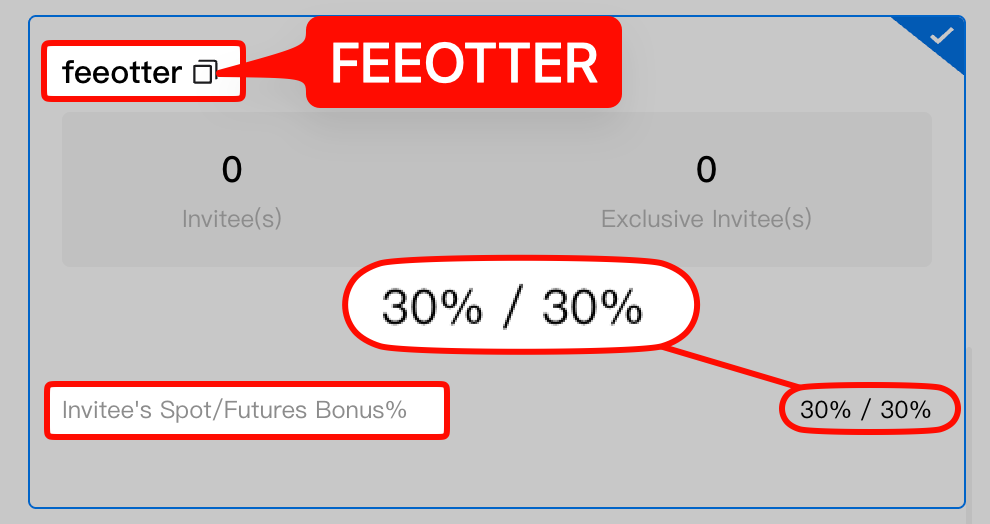
Proof of reserves has nothing to do with rebates, but wherever you keep your funds, trading fees are a long-run cost. Sign up on HTX with our code FEEOTTER and bind through Fee Otter for a 50% futures rebate (30% automatic exchange rebate + 20% extra rebate), 2.5 times a common 20% code. HTX refunds the 30% to your account and Fee Otter pays the 20% as on-chain USDT (BEP20). Details are in the HTX fee rebate guide and HTX referral code.
 Telegram · @feeotter